All Categories
Featured
The Cost of Insecurity in a Connected R&D Environment
How Decentralization Is Altering the Way We Secure R&D 3&...

10 Security Difficulties Dealing With Remote R&D Teams in...

a Worldwide Collaborative Network How to Optimize Your Tech Center forDigital Improvement The Crossway of Cybersecurity and Sustainable Design Why Remote R&D Needs More Than Just Fast Internet Scaling
Table of Contents
- – The Technical Structure of Modern Innovation C...
- – Structure Neural Architectures for Product Design
- – Resource Management and Specialized Skill
- – Secure Data Silos and IP Security
- – The Role of Simulation-First Engineering
- – Hardware Velocity in the R&D Laboratory
- – Communication Throughout Distributed Research ...
- – Adjusting to Rapid Regulatory Changes
- – Future Trends in 2026 and Beyond
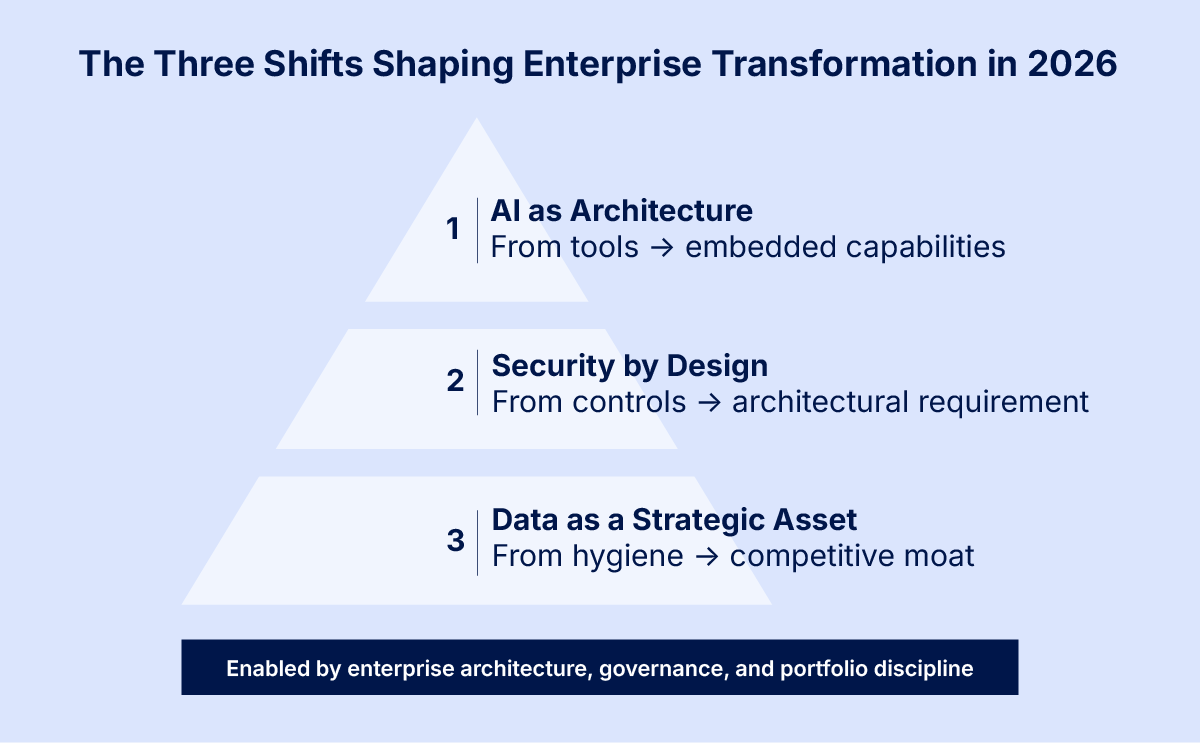


The Technical Structure of Modern Innovation Centers
Item development in 2026 depends on a data-first approach that prioritizes simulation over physical prototyping. The majority of massive operations have moved away from traditional lab structures toward high-density calculate facilities. These sites serve as the main engine for checking new materials, software application configurations, and mechanical designs. The shift is driven by the reducing expense of specialized silicon and the increasing precision of physics-based models that permit countless versions in a virtual environment before a single physical unit is built.A standard R&D facility now houses devoted server clusters running private big language models. These models are trained exclusively on exclusive information to make sure intellectual residential or commercial property stays protected. By keeping the processing local, companies avoid the latency and personal privacy dangers related to public cloud services. This local processing capability allows engineers to query decades of internal test outcomes and design documents in seconds, efficiently turning the business's history into an active part of the style process.Reliability in these systems is kept through redundant power supplies and advanced liquid cooling systems. In 2026, the thermal management of a research study website is as important as the engineering skill itself. Without stable temperatures, the high-performance chips needed for complex simulations would throttle, decreasing the development cycle by weeks or months. Organizations focusing on Enterprise Scaling have actually found that facilities stability is the greatest predictor of fulfilling quarterly advancement targets.
Structure Neural Architectures for Product Design
The approach agentic workflows has actually redefined how technical groups approach problem-solving. In previous years, researchers by hand input variables into simulation software application. In 2026, self-governing representatives manage the optimization process. These representatives are set with specific constraints-- such as weight, cost, and durability-- and are left to go through countless design variations. The human engineer serves as a curator, reviewing the leading three percent of results instead of carrying out the grunt work of variable adjustment.Neural networks used in this capacity are progressively modular. Instead of one huge design for whatever, business utilize a series of smaller, highly specialized designs. One might focus on fluid dynamics while another evaluates manufacturing feasibility based upon existing supply chain accessibility. This modularity makes it simpler to upgrade specific parts of the system without retraining the entire structure. It likewise enables much better openness when a design fails, as the team can trace the error back to a specific design's output.Data quality remains the most substantial obstacle. Synthetic information has actually ended up being a staple in 2026, filling the spaces where physical test data is sparse. By utilizing generative designs to create reasonable edge cases, engineers can stress-test designs versus circumstances that are rare in the real life but devastating if they happen. This practice has actually resulted in a significant decline in product remembers and field failures.
Resource Management and Specialized Skill
The function of the scientist has actually shifted towards that of a systems designer. Efficiency in 2026 requires more than deep knowledge of a particular field like chemistry or mechanical engineering. It likewise requires the capability to direct AI agents and translate intricate information visualizations. Hiring is no longer about finding the person with the most experience in a lab, but discovering the person who can best handle the digital tools that run the lab.Internal training programs have become the main technique for talent acquisition. Because the specific tech stack of a 2026 innovation center is often proprietary, companies can not rely on universities to supply completely trained graduates. Instead, they work with for core clinical concepts and after that offer six months of intensive training on their specific AI-driven tools. This investment guarantees that the labor force understands the particular nuances of the company's modeling software application and information governance policies.Investment in Enterprise Scaling continues to grow as companies recognize that human capital is just as efficient as the tools it handles. High-performance groups are identified by their ability to pivot quickly when a simulation exposes a defect. The speed of this pivot is determined by how well the information is indexed and how easily the research study team can interact with the software development side of business.
Secure Data Silos and IP Security
Intellectual property defense is the most cited concern for 2026 R&D heads. As designs become more capable, the threat of a data leakage boosts. If a rival gains access to a proprietary model, they gain more than simply a set of plans. They acquire the entire logic utilized to create those plans. To fight this, many firms utilize "air-gapped" R&D networks that have no physical connection to the outdoors internet.Data obfuscation techniques are also basic. When data moves in between departments, it is typically encrypted or stripped of particular identifiers that might expose a project's supreme goal. Just at the greatest levels of the development center is the complete picture noticeable. This compartmentalization avoids a single security breach from jeopardizing the whole roadmap.The use of blockchain for audit trails has seen a revival in 2026. Every change to a design file and every timely provided to a research representative is recorded on a private journal. This develops an unalterable history of the item's development. If a patent disagreement emerges, the business can offer a minute-by-minute record of the discovery process, proving the originality of their work.
The Role of Simulation-First Engineering
Simulation-first engineering is not just a method however a requirement in the 2026 market. Consumers expect much faster upgrade cycles and greater levels of customization. To fulfill these demands, business must be able to branch their designs quickly. For example, a vehicle maker may create fifty various suspension tunes for a single model to match various regional terrains. This would be impossible without automated simulation.Digital twins function as the centerpiece of this technique. A digital twin is a virtual representation of a physical object that is updated with real-world information in real-time. In 2026, these twins are used throughout the whole item lifecycle. Even after an item is offered, information from its sensing units is fed back into the R&D center to enhance the next generation. This produces a continuous loop of improvement that was formerly impossible.The accuracy of these twins has reached a point where they can forecast wear and tear within a 5 percent margin of mistake over a ten-year period. This level of accuracy permits thinner margins in material usage, decreasing costs and ecological effect without sacrificing safety. Companies that mastered these simulations early in 2026 now hold a substantial lead in making effectiveness.
Hardware Velocity in the R&D Laboratory
Standard CPUs are seldom used for the heavy lifting in contemporary innovation centers. Instead, Tensor Processing Units and Field Programmable Gate Arrays are the norm. These chips are created to manage the specific types of mathematics used in neural networks and physics engines. By utilizing specialized hardware, teams can complete in hours what utilized to take days.The expense of this hardware is significant, leading to a pattern of "hardware sharing" within large corporations. A division in the local market might utilize a calculate cluster in the morning, while a division in a different time zone takes control of the capacity in the evening. This guarantees that the costly silicon is never ever sitting idle. Efficient scheduling of calculate resources is now a core proficiency for R&D managers.Maintenance of these systems needs a new type of technician. These people should comprehend both the hardware layer and the software stack. If a simulation is running slowly, the issue might be a defective cooling pump or a sub-optimal code bit. The ability to identify issues throughout these various layers is a rare and valuable capability in 2026.
Communication Throughout Distributed Research Teams
While the compute might be centralized, the skill is often distributed. In 2026, virtual truth is utilized for more than simply meetings. It is used for collaborative style reviews. Engineers from around the world can "stand" inside a 3D model of a turbine or a chemical plant and discuss changes as if they remained in the exact same space. This spatial awareness leads to much faster agreement and less misconceptions compared to 2D video calls.Data visualization tools have actually also developed. Rather of simple charts, scientists use immersive environments to check out multidimensional data. They can stroll through a graph of a high-dimensional style area, looking for clusters of effective variables. This instinctive approach to data exploration often leads to "aha" moments that would be missed in a spreadsheet.The integration of these tools into the daily workflow has reduced the need for physical travel, though the significance of the periodic in-person session remains. A lot of effective 2026 development techniques include a mix of high-frequency digital cooperation and quarterly physical events at the primary research website to line up on long-lasting goals.
Adjusting to Rapid Regulatory Changes
In 2026, regulations concerning AI use in R&D are in a consistent state of flux. Different areas have different requirements for transparency and data use. To manage this, innovation centers have integrated "compliance representatives" into their workflows. These are specialized software tools that keep an eye on the R&D process in real-time, flagging any possible offenses of regional or worldwide law.This proactive technique prevents the business from investing millions on a task that can not be lawfully brought to market. The compliance agents are updated daily with the latest legal requirements from every jurisdiction the business runs in. This is particularly essential for industries like pharmaceuticals and aerospace, where safety regulations are strict and the cost of non-compliance is high.Ethics committees likewise play a larger role in 2026. These groups examine the goals of the R&D center to ensure they line up with the company's specified values. As AI makes it simpler to develop effective and possibly harmful technologies, the human element of oversight is more crucial than ever. The goal is to ensure that while the tools are self-governing, the instructions remains firmly in human hands.
Future Trends in 2026 and Beyond
Looking towards the end of 2026, the focus is shifting towards "zero-touch" R&D. This is a principle where the entire process from preliminary hypothesis to final design is dealt with by a chain of AI representatives, with human interaction only at the extremely starting and really end. While this is not yet a reality for many, the elements are being put into place.The next major obstacle will be the combination of quantum computing into the standard R&D stack. While still in the early phases, quantum-classical hybrid systems are starting to reveal promise for specific tasks like molecular modeling. Companies that are already comfortable with AI-driven R&D will be the very best positioned to embrace quantum tools when they become more extensively available.The centers that succeed in 2026 are those that see innovation not as a replacement for human imagination however as a method to magnify it. By getting rid of the repetitive jobs of data entry and fundamental simulation, these companies enable their brightest minds to focus on the big ideas that will define the next decade of industry. The roadmap for 2026 is clear: purchase data, prioritize security, and build a culture that can adjust to the speed of digital experimentation.

Table of Contents
- – The Technical Structure of Modern Innovation C...
- – Structure Neural Architectures for Product Design
- – Resource Management and Specialized Skill
- – Secure Data Silos and IP Security
- – The Role of Simulation-First Engineering
- – Hardware Velocity in the R&D Laboratory
- – Communication Throughout Distributed Research ...
- – Adjusting to Rapid Regulatory Changes
- – Future Trends in 2026 and Beyond
Latest Posts
12 Months to 2026: Preparing Your R&D Facilities
The Cost of Insecurity in a Connected R&D Environment

How Decentralization Is Altering the Way We Secure R&D 3&Metrics for Evaluating Your Hub's Digital Readiness
Latest Posts
12 Months to 2026: Preparing Your R&D Facilities
The Cost of Insecurity in a Connected R&D Environment
How Decentralization Is Altering the Way We Secure R&D 3&Metrics for Evaluating Your Hub's Digital Readiness